I Rejected The Perfect Candidate



The Un-Hirable Expert
The resume landed in my inbox like a gift from the recruiting gods. On paper, Kaushal was a unicorn. His experience read like a backend engineer’s wish list: senior-level Python wizardry, deep expertise in building and scaling APIs, and a portfolio of complex data pipeline projects that made our current infrastructure look like a kid’s Lego set. He was the slam-dunk candidate, the one you screenshot and send to your team with a "🤯" emoji. After weeks of sifting through mediocre applications, it felt like we had finally found our person.
But here’s the thing about the role we were hiring for: it wasn’t clean. This wasn’t some R&D think-tank where you could spend weeks optimizing a single algorithm. This was operational analytics for a Fortune 500 company, the digital plumbing that kept the lights on. The job was to own the data pipelines that fed dashboards to VPs and C-suite execs. When something broke—and it always did—it wasn't a theoretical problem. It was a five-alarm fire. A single error could mean a critical sales dashboard going dark minutes before a board meeting. Delays didn't just cost time; they cost millions. This wasn't the lab; it was the trenches.
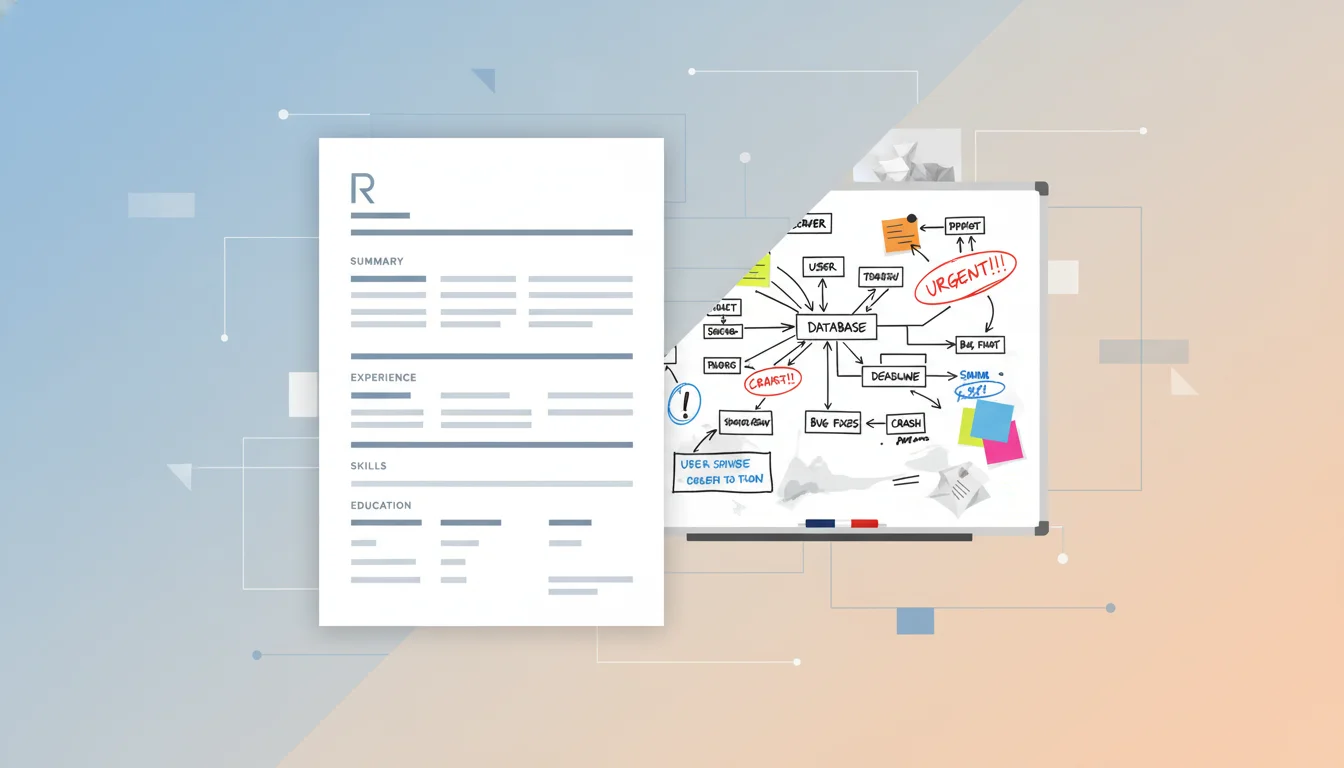
I went into that first interview with my mind basically made up. I thought I was looking for the person with the best skills, the most impressive technical pedigree. I was wrong. I was looking for the right mindset, and I was about to learn the difference the hard way.
A Conversation About Everything But the Job
The first twenty minutes of the interview went exactly as I expected. Kaushal was brilliant. He didn't just answer the technical questions; he elevated them, discussing trade-offs and architectural philosophies with an easy confidence that confirmed everything on his resume. He whiteboarded a complex data-flow problem like he was doodling on a napkin. He was sharp, articulate, and knew his craft inside and out. Check, check, and triple-check. This was our guy.
Then, I shifted the conversation. "Tell me about your ideal work environment," I asked. "How do you handle it when things get unexpectedly intense?" The vibe changed instantly. The confident, fluid language of a technical expert was replaced by the careful, measured words of someone navigating a minefield. His shoulders tightened just a fraction. He was no longer talking about code; he was talking about himself.
His answers were a masterclass in unspoken priorities. He spoke eloquently about burnout at his last company. He mentioned his strict fitness routine and the need for predictable downtime to maintain it. He described past projects not in terms of the challenges they solved, but the personal toll they took. He wasn't talking like someone who had learned from stress; he was talking like someone trying to escape it. To him, the word "challenge" was a synonym for "stress," and "ownership" was a codeword for "anxiety." This wasn’t a character flaw—it was a critical data point.
I felt that slow, sinking feeling every hiring manager dreads. His technical brilliance was becoming irrelevant. In that moment, I realized a fundamental truth: technical skill cannot compensate for emotional or cultural misalignment. He wasn't interviewing for a role that would challenge him to grow; he was looking for a sanctuary, an escape from a high-pressure reality that this job would only amplify tenfold.
The Quiet Sound of Competence
My next interview was with Shivam. His resume was solid but not spectacular. He had the right data engineering background and a steady career progression, but he didn't have the "wow" factor of Kaushal. There were no flashy FAANG companies or mind-blowing open-source contributions. Frankly, my expectations were reset to a much more terrestrial level.
The conversation couldn't have been more different. It was calm, mature, and steady. There was no pretense, no performance. He spoke like a professional who fixes things for a living, not someone who fears them. When I asked him about pressure, he didn't talk about his feelings; he talked about process. "You need clear communication channels and a well-documented recovery plan," he said. He didn't flinch when I described the on-call rotations or the operational nature of the work. It was just… the job.

But the real green flag, the moment that changed everything, was when I asked why he was leaving his current role. I was expecting a story about a bad manager or a lack of opportunity. Instead, he said, "My role is shifting more into management and strategy, and honestly, I just miss being hands-on. I enjoy the delivery, the building, the problem-solving." He wasn't running from pressure or chaos. He was actively running toward the very work we needed someone to do. His core motivation was perfectly and completely aligned with the vacant position.
That was the "aha!" moment. Where Kaushal expressed anxiety, Shivam showed calm acceptance. Where Kaushal saw threats to his personal life, Shivam saw the work itself. I finally understood that I wasn't just hiring for the noun "Data Engineer." I was hiring for the verb: to engineer data reliably, consistently, and without drama, especially when things got hard.
Hiring for the Verb, Not the Noun
I rejected Kaushal and made an offer to Shivam that afternoon. The decision wasn't about finding the person who knew the most. It was about finding the person who was emotionally and mentally equipped to do the work. Kaushal could have built us a palace, but he would have hated every minute of it, and his misery would have become the team's problem. Shivam was ready to build a fortress, brick by brick, and take pride in its stability.
This experience fundamentally changed how I view interviews. Standard technical screenings are great for creating a shortlist, but they are terrible at predicting success in high-pressure, high-ownership roles. They test for knowledge, not resilience. They validate what a candidate knows, not how they’ll behave when a production server fails and the whole company is watching. It’s in those moments that an engineer’s real value is revealed, and it has almost nothing to do with whether they can reverse a binary tree on a whiteboard.
So now, I listen for intent instead of just keywords. Is the candidate talking about what they want to avoid (stress, long hours, unpredictability) or what they want to achieve (solving tough problems, building reliable systems, growing their skills)? That single distinction reveals their deepest motivations. I listen to how they describe past failures. Do they blame systems, processes, or other people? Or do they take ownership and talk about what they learned? These subtle cues tell you more than a perfect score on a coding challenge ever will.
Mindset is the ultimate skill. It's not a "soft skill"; it's a foundational requirement for performance. In a role like this, I need realistic optimism (knowing things will break but having the confidence to fix them), a bias for action (not waiting for permission to solve a problem), and emotional stability (not letting stress cascade into panic). These traits are the bedrock upon which all technical skills are built.
Being brutally honest about a job's demands isn't about scaring candidates away. It’s an act of deep respect for their time and ours. It’s a filter that protects the company from a bad hire, the team from a culture clash, and the candidate from a role that will inevitably lead to burnout.
The Most Important Skill Isn't on the Resume
In the end, I learned that the true cost of a bad hire isn't just a skills gap; it's a mindset gap. Companies don’t just fail because their tech is buggy. They crumble under the weight of misaligned people—brilliant individuals who are emotionally or temperamentally wrong for the fight they're in. The cost of hiring a brilliant but misaligned person is a thousand times higher than hiring a solid, aligned one. You don't just pay in lost productivity; you pay in morale, momentum, and your own time as a manager.
Skills get a resume to the top of the pile. But mindset is what decides if someone will thrive or just survive. The next time you interview someone, stop asking only what they can do. Listen, truly listen, for who they are prepared to be when things get hard.

Antriksh Tewari
Head of Digital Marketing
Antriksh is a seasoned Head of Digital Marketing with 10+ years of experience who drives growth across digital, technology, BPO, and back-office operations. With deep expertise in analytics, marketing strategy, and emerging technologies, he specializes in building proof-of-concept solutions and transforming them into scalable services and in-house capabilities. Passionate about data-driven innovation, Antriksh focuses on uncovering new opportunities that deliver measurable business impact.