Your Brand Is Making a Lot of Noise, But Saying Nothing at All



The Sound of Silence: When Your Content Calendar is Full but Your Brand is Empty
Let’s paint a picture you probably know all too well. Your content calendar is a work of art—a vibrant tapestry of daily posts, meticulously planned reels, perfectly designed carousels, and captions that have been rewritten three times over. The team is hustling, the output is constant, and from the outside, it looks like you’re absolutely crushing it. You are doing the work. The motion is undeniable; the effort is visible. You are, by all accounts, making a lot of noise.
But here’s the paradox that keeps you up at night: despite all this frantic activity, the needle isn't moving. Engagement is a flat line, sales are a rollercoaster of unpredictable highs and lows, and meaningful growth has completely stalled. The math ain't mathing. You’re pouring time, energy, and resources into the content machine, but it feels like you’re just spinning your wheels. The real problem surfaces when you step back and ask a simple question: What does our brand actually stand for? If the answer is a jumble of trendy audio, disconnected visuals, and a dozen different messages, you’ve found the issue. The problem isn’t a lack of effort; it’s the deafening silence where a unifying strategy should be.

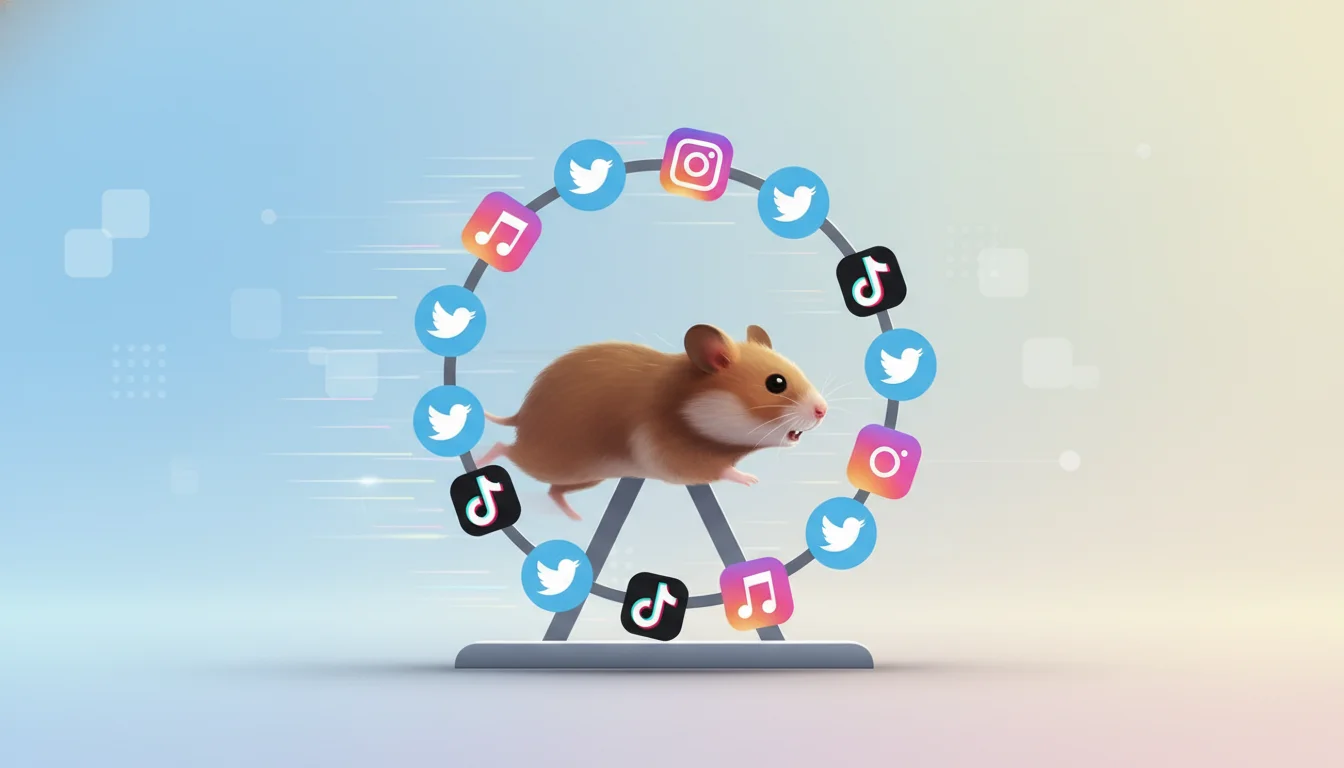
The Hamster Wheel of "More": Confusing Activity with Progress
In the digital world, it’s incredibly easy to fall into the trap of believing that doing more is the same as achieving more. We've been conditioned to think that visibility is the ultimate prize, so we fill every available slot in our content schedule, assuming that a higher volume of posts will automatically lead to growth. This mindset puts us on a hamster wheel, running faster and faster just to stay in the same place. We’re so focused on the doing that we forget to ask why.
The symptoms of this mindset are universal. It’s the frantic scramble to jump on every new TikTok trend, even if it has nothing to do with your brand’s core message. It's the constant, obsessive redesign of your Canva templates, hoping that a new font or color palette will magically fix your engagement problem. It’s rewriting a single caption five times, tweaking words until they lose all meaning in a desperate attempt to "keep up" with an ever-changing algorithm. You’re reacting, not leading.
The result of this constant motion isn’t momentum; it’s just noise. When your brand’s messaging shifts from week to week, your visuals become a meaningless collection of aesthetics, and your voice changes with the latest trend, you create confusion. Your audience can’t quite put their finger on it, but they sense the inconsistency. They don’t know what to expect from you, what you believe in, or why they should care. And in a crowded digital space, a brand that is inconsistent is a brand that is easy to ignore.
Why Most Content Fails Before It's Even Created
Here's a hard truth: your content isn't failing because the design is off or the caption isn't witty enough. It's failing long before you even open Canva. It fails at the thinking stage—in the silence before the keyboard starts clacking. The most beautiful carousel in the world can't save a message that has no purpose.
Most content is dead on arrival because the foundational elements are completely missing. There’s often:
- No clearly defined audience: Who are you actually talking to? "Everyone" is not an audience. Without a specific person in mind, your message becomes generic and resonates with no one.
- No specific objective: What is this one piece of content supposed to do? Is it meant to build awareness, generate a lead, foster trust, or drive a sale? Without a job to do, a post is just floating in the digital ether.
- No system connecting one post to the next: Your content should feel like a cohesive conversation, not a series of random, disconnected shouts. Each piece should build on the last, guiding your audience on a deliberate journey.
This creates a "positioning problem," not a "posting problem." Brands can post for years—literally, years—and still be unable to articulate their unique value in a single, compelling sentence. Their feed becomes a graveyard of random visuals, half-baked ideas, and expired trends. It’s a portfolio of activity, not a body of work that builds a clear, authoritative brand. The alternative? Good content is never an accident. It’s intentional. And that intention is born from a clear, unshakeable strategy.
The Part We Always Want to Skip: Strategy Before Execution
Let’s be honest: strategy feels… slow. It’s the part we all want to skip. Designing a beautiful graphic feels productive. Scheduling a week’s worth of posts feels visible. Writing a killer caption feels creative. Strategy, on the other hand, feels abstract and intangible. It’s sitting with a blank document and answering hard questions, and it doesn't come with the instant gratification of hitting "publish."
But this is where we get it all wrong. We treat our execution tools—Canva, CapCut, social media schedulers—like they are the strategy itself. They aren’t. They are simply the vehicles used to express an idea. A hammer is a great tool, but it’s useless until an architect hands you a blueprint. Your design skills, video editing prowess, and posting schedule are the hammers; strategy is the blueprint. Without it, you’re just nailing boards together at random, hoping it eventually looks like a house.
Before you create another piece of content, stop and ask the non-negotiable strategic questions:
- Who is this for? (Get painfully specific.)
- What problem does it solve for them? (Connect your message to their world.)
- What is the one thing they should understand after seeing it? (Clarity is king.)
- What action should they take next? (Give them a clear next step.)
- How does this one post support our long-term vision? (Connect the dots.)
Answering these questions first is the difference between adding to the noise and building a legacy.
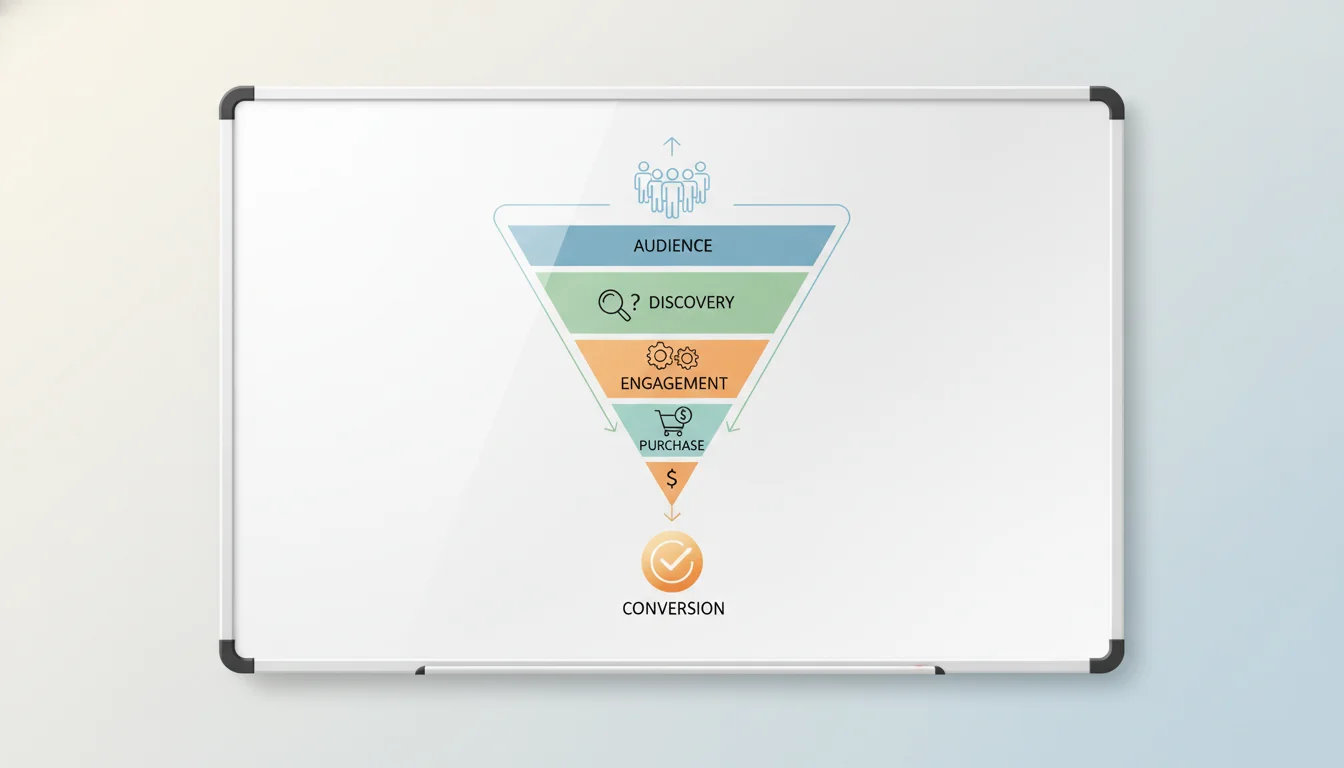
From Decoration to Direction: Principles for Content That Carries Weight
To move beyond just posting for the sake of posting, you need a framework. These aren't just tactics; they are core principles for building a content system that actually works—one that transforms your content from simple decoration into a powerful tool for direction.
First, clarity before creativity. We often get so caught up in making things look good that we forget to make them make sense. A clear, powerful message delivered in a simple format will always outperform a stunningly beautiful design that says absolutely nothing. Your audience is scrolling fast; they don't have time to decipher a confusing message, no matter how pretty it is.
Next, build systems over trends. Chasing trends is a recipe for burnout. They are fleeting, exhausting, and rarely build long-term brand equity. A solid content system, on the other hand, provides stability. It establishes recognizable formats and pillars that your audience can count on. This consistency compounds over time, building trust and authority while allowing you to scale your efforts without reinventing the wheel every week.
Remember that design is communication, not decoration. The purpose of any visual element—a color, a font, an image—is to support and clarify the core message. If a design choice doesn't make your point easier to understand, it’s just decoration. Great design is invisible; it serves the message so effectively that the user doesn’t notice the design itself, only the idea it conveys.
Finally, understand that every single piece has a job. Don't just post to fill a slot. Assign each post a specific purpose in your customer’s journey. Is this post designed to attract new eyeballs (awareness)? Is it meant to show your expertise and build credibility (trust)? Is it guiding someone toward a purchase (conversion)? Or is it delighting an existing customer (retention)? If a post doesn't have a job, it's just taking up space.
The Shift: When Content Becomes an Asset, Not a Task
When you finally make the shift from a chaotic, execution-first approach to a calm, strategy-led one, the transformation is tangible. Your brand goes from being one of many forgettable faces in the crowd to being instantly recognizable. Your messaging, once fragmented and confusing, consolidates into a single, coherent voice that resonates deeply with your target audience. People finally get what you do without needing a hard sell.
The impact ripples outward. Your audience starts to engage intentionally because your content is now speaking directly to their needs, challenges, and aspirations. They’re not just double-tapping; they're saving, sharing, and starting conversations. And as a result, your growth becomes more predictable. You're no longer at the mercy of a viral trend or a lucky break. You’re building a reliable system that consistently attracts the right people and nurtures them into loyal customers.
Ultimately, this strategic shift changes your entire perspective. Content stops feeling like a dreaded daily chore—a box to be checked on an endless to-do list. Instead, it becomes what it was always meant to be: a valuable, long-term asset that works for your business 24/7, building your brand’s authority and driving results even when you’re not actively posting.
Stop Shouting, Start Leading
The instinct to increase your content output is often a reaction to uncertainty. When we don't know if what we're doing is working, our default response is to simply do more of it, louder and faster. But more content doesn't fix unclear thinking—it just amplifies it for the world to see. Committing to strategy doesn't slow you down; it’s the only thing that can truly speed you up by eliminating all the wasted time, energy, and resources spent on work that was never going to move the needle.
So let’s make it plain: Posting more won’t fix unclear positioning. Better visuals will never be a substitute for weak messaging. And chasing the latest trend will not save a brand that has no direction.
It’s time to trade the hamster wheel for a roadmap. It’s time to stop shouting into the void and start leading a conversation. Because content only truly works when strategy leads the way. Everything else is just noise.

Antriksh Tewari
Head of Digital Marketing
Antriksh is a seasoned Head of Digital Marketing with 10+ years of experience who drives growth across digital, technology, BPO, and back-office operations. With deep expertise in analytics, marketing strategy, and emerging technologies, he specializes in building proof-of-concept solutions and transforming them into scalable services and in-house capabilities. Passionate about data-driven innovation, Antriksh focuses on uncovering new opportunities that deliver measurable business impact.