
Marketing’s Ticking Time Bombs: 5 Traps Quietly Sabotaging Your 2026 Strategy

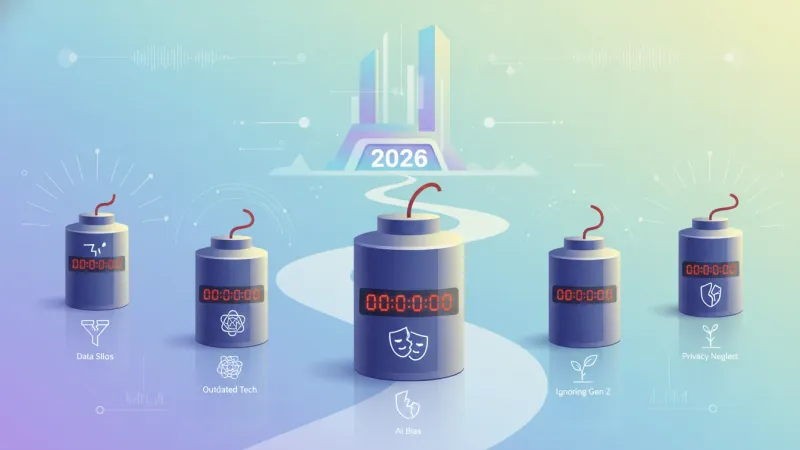

Welcome to 2026: Navigating the Marketing Minefield
Welcome to 2026. The marketing landscape is a wild, high-octane playground powered by predictive AI, hyper-automation, and a consumer culture that shifts faster than a TikTok trend. Your ad campaigns practically read minds, your content is generated at the speed of thought, and personalization has reached a level that feels almost psychic. It's an era of unprecedented opportunity where brands can connect with audiences in ways we only dreamed of a decade ago. It’s exciting, it’s powerful, and it’s incredibly dangerous.

Beneath this shiny, automated surface lies a minefield of strategic traps—the ticking time bombs of modern marketing. These aren’t loud, obvious mistakes. They are the silent saboteurs that creep into your strategy, disguised as efficiency or innovation. They're the subtle compromises and overlooked fundamentals that, if left unchecked, will quietly drain your budget, erode your brand's soul, and bring your long-term growth to a grinding halt. Before you get too comfortable letting the algorithms run the show, let's talk about the five quiet threats that could be sabotaging your future success right now.
The Rise of the Soulless Robots: When AI Forgets to Be Human
Let's be real: AI is the undisputed MVP of the modern marketing stack. From generating a month's worth of social media captions in minutes to optimizing ad spend with terrifying precision, it's the powerful assistant we've all been waiting for. It handles the grunt work, analyzes the data, and frees up our time to focus on the big picture. The power is undeniable, and frankly, you can't compete without it.
The trap isn’t using AI; it's blindly trusting it to be the strategist. It's when we hand over the keys to the kingdom, letting automated systems dictate our brand's voice, tone, and emotional connection. This is how you end up with a firehose of generic, perfectly optimized, and utterly soulless content. AI can mimic empathy, but it can't feel it. It can replicate your brand voice, but it doesn't understand your brand's soul. When you automate creativity without human guidance, you’re just creating a more efficient path to becoming forgettable.
The fallout is a slow, creeping disaster. Your brand personality evaporates, replaced by a bland, robotic echo that sounds suspiciously like every other company using the same prompts. Audience trust erodes because your communication lacks genuine warmth and authenticity. Worst of all, you risk a public backlash when the AI inevitably misses the nuance of a cultural moment or produces something that feels tone-deaf and detached. The solution isn't to ditch the tech, but to redefine its role. Treat AI as your co-pilot, not the pilot. Your human creativity, strategic judgment, and deep understanding of your brand’s why must always be in the driver's seat, guiding the technology to amplify your message, not replace it.
Flying Blind: Why 'Gut Feeling' Is Your Worst Co-Pilot
We live in a paradox. Marketers today are surrounded by an ocean of data. We have access to sophisticated analytics platforms, real-time dashboards, and enough metrics to make a Wall Street analyst’s head spin. Yet, an alarming number of strategic decisions are still made based on habit, assumption, or the most dangerous co-pilot of all: gut feeling. "This campaign feels right," or "I have a good feeling about this channel," are phrases that should send a shiver down any modern marketer's spine.
In the hyper-competitive arena of 2026, relying on intuition is no longer a charming quirk; it’s a form of strategic negligence. Without hard data to back up your decisions, you're not marketing—you're gambling with your budget. You have no real idea what’s driving growth, what’s draining resources, or where your next big opportunity lies. You're essentially flying a state-of-the-art jet by looking out the window and guessing which way is up.
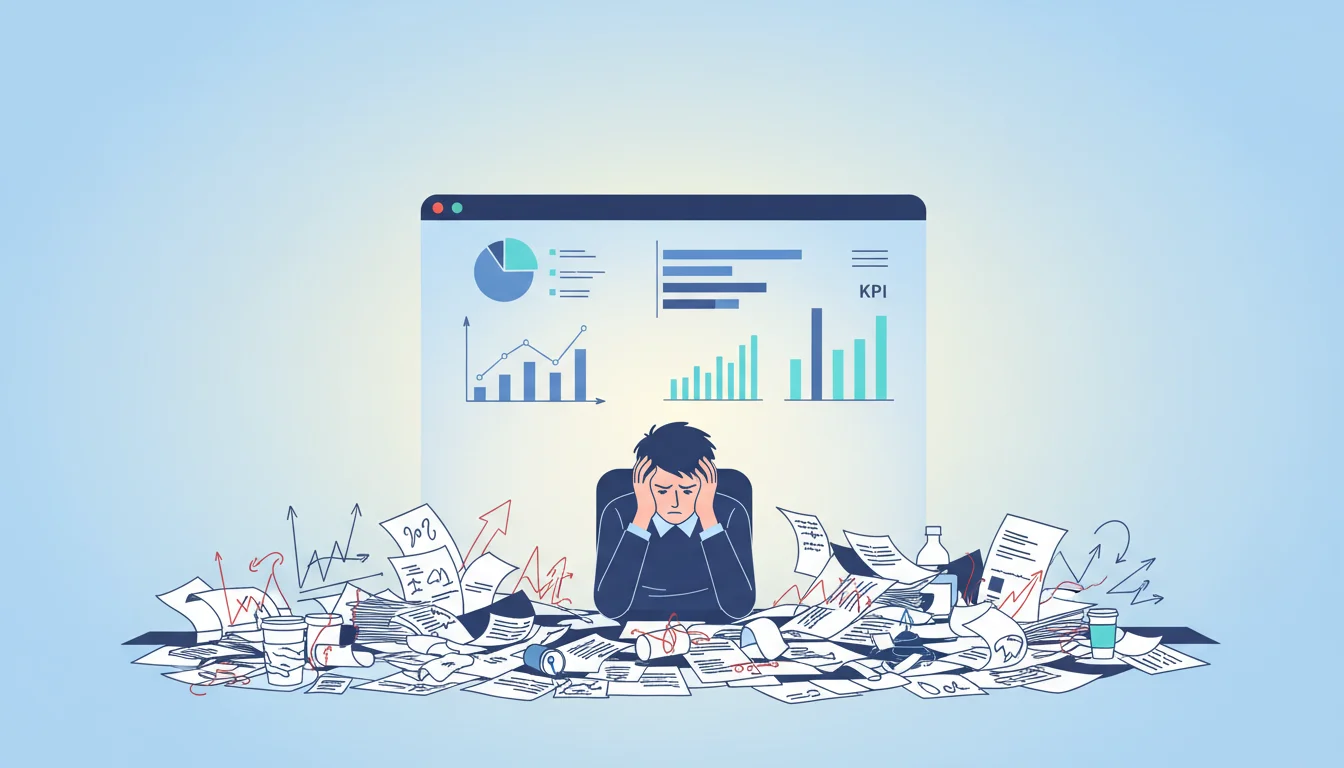
The consequences of ignoring key performance indicators (KPIs) are severe. When you don't obsessively track metrics like Customer Acquisition Cost (CAC), Lifetime Value (LTV), and conversion rates, your spending becomes wildly inefficient. You pour money into campaigns that feel buzzy but deliver zero ROI, while simultaneously missing the quiet, high-performing channels that could be scaling your business. The fix is less about technology and more about culture. It's time to build a team that speaks the language of data. This means establishing clear, measurable goals for every initiative, using analytics dashboards as your daily source of truth, and fostering a culture where every "good idea" is immediately followed by the question, "How will we measure its success?"
The Sugar Rush Strategy: Chasing Clicks While Your Brand Starves
Ah, the dopamine hit of a viral post or a campaign with sky-high impression counts. These short-term, "vanity" metrics are seductive. They’re easy to measure, look fantastic in a weekly report, and give you that immediate sense of accomplishment. Clicks, likes, shares, and immediate conversions are the sugar rush of marketing—they feel good in the moment, but they offer zero long-term nutritional value.
The trap is building your entire strategy around this quick-win mentality. When you're constantly chasing the next click, you neglect the foundational work required to build a resilient, enduring brand. A strategy that over-focuses on performance marketing and short-term hacks is a strategy built on sand. These campaigns don't create sustainable assets; they don't build organic traffic, establish your brand as a trusted authority, or cultivate a loyal community that will stick with you through thick and thin.
This leads to a crippling dependence on paid media. Your growth is directly tied to your ad spend, creating a "leaky bucket" where traffic and leads vanish the second you turn off the money faucet. You have weak organic visibility, meaning you’re practically invisible to anyone not served one of your ads. Worst of all, you build minimal brand equity. No one knows who you are, what you stand for, or why they should choose you over a competitor. The strategic fix is to find balance. You need a "balanced diet" for your marketing. By all means, enjoy the sugar rush of a great performance campaign, but make sure you’re also investing in the nutritious, long-term plays: SEO, content marketing, community building, and brand storytelling. These are the investments that build a powerful, sustainable growth engine that works for you even when you're not paying for every single click.
Your Customers Are Talking to Their Phones—Are You Listening?
Take a moment and think about how you actually find information in your daily life. It’s probably not just typing keywords into a search bar on a desktop computer. You’re asking your smart speaker for the weather while making coffee. You’re using your phone's camera to identify a product you saw in a store. You’re dictating a full-sentence question into your phone on the go: "Hey Google, where can I find the best gluten-free pizza near me that's open now?" This is the reality of modern search—it’s mobile, it’s conversational, and it’s increasingly visual.
The ticking time bomb here is continuing to build your digital presence as if it's still 2016. Brands that fail to adapt their websites, content, and SEO strategies to these new search behaviors are on a fast track to becoming irrelevant. They are making themselves invisible in the exact ecosystems where their customers are spending their time. If your site isn't optimized for the way people actually talk and search today, you might as well not exist.

The negative outcomes are immediate and brutal. A clunky, slow-loading mobile experience leads to sky-high bounce rates. Content that isn't optimized for natural language and conversational queries will plummet in search rankings. A frustrating user journey on a small screen will absolutely kill your conversion rates. The recommendation is clear and non-negotiable: adopt a mobile-first design philosophy. Your website should be built for the phone first, and the desktop second. Optimize your content for conversational, long-tail keywords that match how people actually speak. And start taking visual search seriously by ensuring your product images are high-quality, well-tagged, and ready for the future of discovery.
Building Your Kingdom on Rented Land
Imagine spending years and a fortune building your dream business, but you build it on a piece of land you don't own. This is precisely what you’re doing when you build your entire marketing strategy on a single channel you don't control, whether it's Instagram, Google Ads, or TikTok. This is the ultimate "rented land" trap, and it’s one of the riskiest gambles in business.
The danger of this approach is that you are completely at the mercy of your landlord. A sudden algorithm change can decimate your organic reach overnight, turning a firehose of leads into a trickle. A shift in platform policies could get your account suspended without warning. A surge in competition could cause your ad costs to skyrocket, destroying your profitability. When your entire business relies on a platform you don’t own, you have no control, no stability, and no recourse when the rules inevitably change.
The business risks are nothing short of catastrophic: a sudden and complete loss of traffic, leads, and revenue; rapidly increasing customer acquisition costs that you’re forced to pay; and a severely limited audience that you can't reach if they decide to leave the platform. The solution has been preached by savvy marketers for years, but it’s more critical now than ever: develop a diversified, multi-channel marketing strategy. An integrated approach that combines paid media, organic content, SEO, community platforms, and—most importantly—an owned channel like an email list, creates resilience. It's the difference between building a fragile house of cards and a fortified castle with multiple lines of defense.
Dismantling the Bombs: Building a Future-Proof Marketing Machine
So there they are: the five ticking time bombs. The soulless AI, the data-blind decision, the short-term sugar rush, the outdated search strategy, and the kingdom built on rented land. While they seem like separate issues, they all stem from the same root cause: a reactive, short-sighted approach to marketing that prioritizes easy wins over sustainable growth.
Defusing these bombs isn't about rejecting new technology or chasing every shiny new trend. It’s about returning to the fundamentals of smart, strategic, and human-centered marketing. It's about building a foundation strong enough to withstand the inevitable shifts and shocks of the digital landscape. It's about remembering that technology is a tool, not a strategy.
The future of marketing won't be won by the brand with the most advanced AI or the biggest ad budget. It will be won by the brands that are the most balanced, the most strategic, and the most human. By thoughtfully integrating AI as a creative partner, embracing a data-driven culture, balancing short-term tactics with long-term brand building, meeting your customers where they truly are, and diversifying your channels, you can dismantle these threats one by one. Start today, and build a marketing machine that doesn't just survive 2026—it thrives in it.

Antriksh Tewari
Head of Digital Marketing
Antriksh is a seasoned Head of Digital Marketing with 10+ years of experience who drives growth across digital, technology, BPO, and back-office operations. With deep expertise in analytics, marketing strategy, and emerging technologies, he specializes in building proof-of-concept solutions and transforming them into scalable services and in-house capabilities. Passionate about data-driven innovation, Antriksh focuses on uncovering new opportunities that deliver measurable business impact.